
Thoughts!
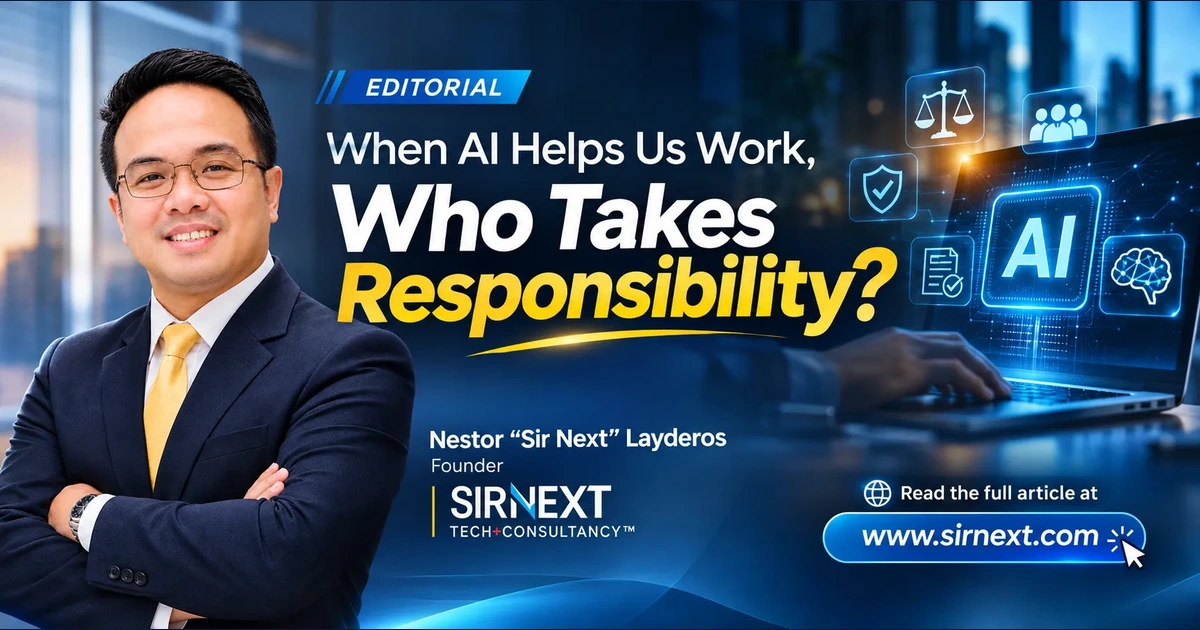
When AI Helps Us Work, Who Takes Responsibility?
What an AAP ethics discussion made me reconsider about the way I publish, advise, and teach.
On October 30, 2024, I joined an online General Membership Meeting of the Analytics & Artificial Intelligence Association of the Philippines (AAP). One part of the meeting was a discussion of the draft Code of Ethics for AI Professionals. The question I keep coming back to is one I can ask even when I’m working alone: if I put my name on something AI helped me create, what do I owe the people who will read it or act on it?
That question feels more urgent now. A convincing visual can look like a photograph of something that never happened. A polished analysis can make a weak assumption hard to spot. And a small team can save ten minutes drafting with AI, then spend fifteen minutes fixing the result. The benefit is real when the work improves. We have to check whether it actually did.
AAP’s Code of Ethics for AI Professionals, whose public executive summary is dated July 22, 2025, gives me a useful starting point. It asks professionals to consider who benefits, who could be harmed, and who is responsible. I read it as an AAP member and a practitioner. What follows is how I want to apply those ideas to my own work.
Download AAP’s Code of Ethics for AI Professionals executive summary (PDF)
If I publish it, I check it
For AI NewsWatch™, a tool can help me sort through information, but I still need to open the original source, check the date, and distinguish an announcement from something that has actually happened. If I get it wrong, I owe readers a correction. Visuals deserve the same care. If I materially reconstruct an event image with AI, I should label it so readers don’t mistake it for a documentary photograph.
Protect what people entrust to me
When I prepared my AAP membership story, I asked for the member ID to be hidden in the public artwork. The card could tell part of the story without exposing the number. The same judgment matters when a client shares a file or a school provides student work. I should use only the information needed for the task and leave personal or confidential records out of unapproved tools. In a workshop, a fictional case can teach the same lesson without putting anyone’s data at risk.
Test one task before automating the whole process
For a small Philippine business, I’d start with one customer inquiry. Write a response manually, then try it with AI using the same approved facts. Count the time for checking and corrections. See whether both answers are accurate and fair to the customer. Before going live, decide who takes over when the tool can’t answer safely. If the assisted version doesn’t improve the work after review, don’t scale it yet.
I want to bring these habits into Sir Next: Tech + Consultancy™ and into the rooms where I teach. Start with a real need. Protect what was entrusted to you. Check what comes out. And when the work affects someone else, make sure there is a person they can turn to.
AI can help me do the work. I’m still responsible for what I put my name on.
This is my personal reflection. It is not an official AAP statement or endorsement.
Loading comments…