
Thoughts! · Book summary & reflection
The JIL Love Story: 16 Chapters That Reminded Me What It Truly Means to Say “JESUS IS LORD”
A Chapter-by-Chapter Summary and Sir Next Reflection on The JIL Love Story: The Church Without a Roof

There are books we read for information. There are books we read for inspiration. And then there are stories that quietly ask us to examine our own lives.
For me, The JIL Love Story: The Church Without a Roof belongs to the third kind.
At first glance, it is the story of Jesus Is Lord Church and the extraordinary journey of Bro. Eddie Villanueva. But the deeper I went into its chapters, the more I realized that this is not simply the history of a church. It is a testimony of transformation—how God can take conviction, pain, questions, rejection, courage, and even a rebellious past and place everything under the Lordship of Jesus Christ. The story traces a movement that was not born from impressive buildings or abundant resources, but from surrender, prayer, sacrifice, persecution, and an intense love for God and the Filipino people.
And perhaps that is why this book became personal to me.
As I read the chapters, I found myself asking: If Jesus is truly Lord, what does that mean for my choices, leadership, relationships, ambitions, failures, influence, and future?
These are my takeaways.

Chapter 1 — Ten Seconds in Tokyo
Chapter Summary
The story begins with Joaquin Villanueva, the father of Bro. Eddie Villanueva—a gifted Filipino athlete and sprinter who represented the country internationally. His discipline, courage, patriotism, and perseverance became part of the family heritage that would later shape Eddie.
But Joaquin’s story was not merely about athletic strength. Eventually, physical weakness confronted him with the limitations of human ability. In that place of vulnerability came an encounter with Christian faith and the power of prayer.
There is something beautifully prophetic about this opening: Joaquin ran races for the Philippines, while his son Eddie would later run a very different race—a spiritual race for Christ and for the Filipino people.
Sir Next Takeaway
Before God raised a spiritual revolutionary, He had already planted courage, discipline, patriotism, and perseverance in the family line.
Habang binabasa ko ito, naisip ko na life really is a race—but hindi pala laging tungkol sa kung sino ang pinakamabilis. Mas mahalaga kung sino ang patuloy na tatakbo kahit napapagod, nadadapa, o hindi malinaw kung gaano pa kalayo ang finish line. Hebrews 12:1 tells us to “run with perseverance the race marked out for us.” I am reminded not to measure my journey against someone else’s pace. May sariling race na ibinigay ang Diyos sa akin. My responsibility is not to outrun everybody; it is to remain faithful to the One who called me. Jesus is Lord over my race, my pace, and my destination.
Chapter 2 — Communist Conflicts, Lucrative Propositions
Chapter Summary
Young Eddie emerges as a passionate activist and labor leader who could not remain silent in the face of injustice, exploitation, corruption, and the suffering of workers.
His convictions came with consequences. He faced intimidation, violence, arrest, and powerful interests that wanted him silenced. At one point, a wealthy industrialist attempted to buy his cooperation through money, business opportunities, and influence. Eddie refused.
Even before his conversion, characteristics that God would eventually use were already visible: courage, concern for the oppressed, leadership, conviction, and an unwillingness to compromise. But his fire was still largely directed by political ideology rather than the transforming power of Christ.
Sir Next Takeaway
God did not remove Eddie’s fire when He saved him—God purified it.
This chapter made me ask a difficult question: Kapag dumating ang opportunity na maganda sa mata pero kailangan kong i-compromise ang values ko, kaya ko rin bang tumanggi? Mark 8:36 asks, “What good is it for someone to gain the whole world, yet forfeit their soul?” In leadership, business, career, and even ministry, not every attractive opportunity is necessarily from God. Character matters. Integrity matters. There will be moments when saying yes may make life easier, but saying no keeps the heart right before God. Jesus must be Lord not only over the opportunities I pursue, but also over the opportunities I am willing to walk away from.
Chapter 3 — The Rally
Chapter Summary
This chapter shows Eddie at the height of his political activism. He could stir crowds with powerful speeches against imperialism, capitalism, exploitation, and social injustice.
Yet underneath the revolutionary passion was a darker reality. Violence surrounded the movement. There was even a plot to assassinate Eddie because another group considered his growing influence a threat.
The chapter forces an uncomfortable question: can political change alone heal the human heart?
Eddie could mobilize thousands, but ideology could not eliminate hatred, greed, revenge, bitterness, or violence. He was beginning to wrestle with an even bigger question: Where is God in all this suffering?
Sir Next Takeaway
A movement may change rulers without ever changing hearts.
Minsan kapag alam nating tama ang ipinaglalaban natin, feeling natin justified na rin ang anumang paraan ng pakikipaglaban. But James 1:20 says that human anger does not produce the righteousness of God. This chapter reminds me that I can stand firmly for what is right without allowing hatred to control me. I can speak against injustice without becoming unjust myself. As a communicator and leader, my words carry weight. Kaya hindi lang ano ang ipinaglalaban ko ang kailangang i-submit kay Lord—pati paano ko ito ipinaglalaban. Jesus should be Lord over my convictions, my emotions, and my voice.
Chapter 4 — Greed Kills!
Chapter Summary
One of the most painful episodes in the book centers on a seriously injured man whose treatment was delayed because a hospital demanded payment first.
Despite desperate efforts to find help, the man died.
The tragedy pushed Eddie into another battle against injustice. Protests followed, exposing how an institution created to preserve life could lose its humanity when financial interests became more important than compassion.
Eventually, policies changed. But no policy change could restore the life already lost.
The chapter makes a devastating point: greed does not remain an abstract moral problem. Greed hurts people. Greed can kill.
Sir Next Takeaway
We must never allow money, systems, institutions, or reputation to become more important than a human soul.
Nalungkot ako sa chapter na ito because it challenged how easily organizations—and sometimes even leaders—can become focused on numbers, targets, policies, and performance while forgetting the person standing in front of them. Proverbs 19:17 reminds us that kindness to the poor honors the Lord. Excellence matters, but compassion matters too. Success without humanity is empty. I want to become the kind of leader who can pursue results without losing the ability to listen, care, and respond to people in pain. If Jesus is Lord of my life, His compassion must be visible in the way I treat people.
Chapter 5 — Leni, Letters, and Land
Chapter Summary
Here the story moves closer to Eddie’s spiritual turning point.
His marriage to Adoracion “Dory” Jose places beside him a woman whose Christian faith, prayer, patience, and love would become instrumental in his journey toward Christ.
Meanwhile, Eddie becomes involved in a land-grabbing case involving poor families fighting powerful interests. What begins as another struggle for social justice gradually becomes a struggle taking place inside Eddie himself.
Christian friends and relatives write to him. Scripture confronts his worldview. Dory continues praying. Others continue witnessing.
His conversion would not come through emotional manipulation. God patiently worked through relationships, Scripture, intellectual questions, personal crisis, and faithful intercession.
Sir Next Takeaway
Behind many public transformations are hidden people who prayed when nobody was watching.
What touched me here is that God used letters, conversations, relationships, Scripture, and ordinary people to reach Bro. Eddie. Hindi pala kailangang laging dramatic ang paraan ni Lord. Sometimes someone simply plants a seed. Someone else waters it. Then God gives the growth, just as 1 Corinthians 3:6 says. It reminds me not to underestimate a prayer, an encouraging message, a Bible verse shared at the right moment, or a faithful conversation with someone who seems uninterested. I do not have to force transformation. My responsibility is to faithfully plant; God is the One who changes hearts.
Chapter 6 — A Day of Destiny
Chapter Summary
The land dispute intensifies. Eddie faces pressure from powerful people who could destroy his reputation and career. Yet he refuses to abandon those fighting for justice.
Under tremendous pressure, something changes.
Eddie begins seriously reading Scripture. He begins praying. He challenges God to reveal Himself—not merely through inherited religious traditions but personally and truthfully.
The legal struggle eventually turns in favor of the poor complainants. But the chapter’s greatest victory is not a court decision.
It is Eddie’s encounter with Jesus Christ.
For perhaps the first time, he begins seeing that mankind’s deepest problem is not only structural oppression. It is sin. And Jesus is not simply another religious figure—He is Savior and Lord.
Sir Next Takeaway
Sometimes a day of destiny arrives disguised as the most difficult season of our life.
This chapter reminded me that my biggest turning point may not necessarily happen when everything is going well. Sometimes God meets us when our plans stop working and our own strength is no longer enough. Jeremiah 33:3 says, “Call to Me and I will answer you.” Kapag hindi ko naiintindihan ang nangyayari, perhaps God is not destroying my future—maybe He is redirecting it. Maybe the pressure is forcing me closer to the One I should have depended on from the beginning. Jesus is Lord even over the chapters I cannot yet understand.
Chapter 7 — From Blacklisted to Bible Studies
Chapter Summary
Conversion does not immediately erase Eddie’s past.
He remains politically blacklisted. Academic institutions hesitate to accept him because of his reputation as a militant activist.
Yet this apparent rejection becomes the beginning of something extraordinary.
Eddie begins teaching, integrating Christian truth into his lessons, and sharing his testimony. Students become curious. Bible studies begin. Students invite other students. Small groups multiply. Rooms become too small.
What would eventually become JIL does not begin as a powerful institution. It begins as ordinary people opening Scripture together and encountering a changed man whose life made the Gospel believable.
Sir Next Takeaway
The world may blacklist someone, but no blacklist can cancel the calling of God.
This one is powerful because it reminds me that rejection is not always an ending. Sometimes rejection is redirection. Genesis 50:20 teaches that God can turn what was intended for harm into something good. May mga doors na magsasara. May mga tao na iju-judge tayo base sa past natin. May failures na parang final na. But when Jesus becomes Lord, even the chapters we would rather erase can become part of the testimony God uses. My past may explain where I came from, but only God gets to decide where my story goes next.
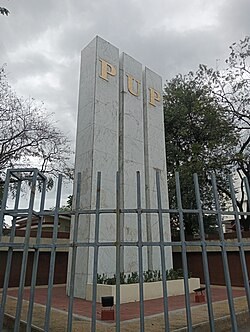
Chapter 8 — September Pentecost
Chapter Summary
September 1978 marks one of the defining moments of the story.
Different Bible-study groups gather. What begins as a student fellowship becomes a powerful spiritual encounter characterized by prayer, worship, repentance, spiritual gifts, healing, and the movement of the Holy Spirit.
Out of this atmosphere emerges the declaration Jesus Is Lord Fellowship, rooted in the biblical truth that every knee will bow and every tongue will confess that Jesus Christ is Lord.
This chapter contains the spiritual DNA of the movement: Jesus at the center, Scripture preached boldly, the Holy Spirit welcomed, ordinary believers empowered, and the Gospel carried beyond denominational boundaries and beyond church walls.
Sir Next Takeaway
“Jesus Is Lord” was never meant to become merely a church name. It is a declaration of ownership, authority, and surrender.
Acts 1:8 says that we receive power when the Holy Spirit comes upon us. Reading this made me realize na Christianity cannot simply become something I attend every Sunday. I can attend services, know the songs, participate in activities, and still miss the deeper reality of personally knowing Christ. What started JIL was hunger—people hungry for Scripture, prayer, worship, and God’s presence. That same hunger must remain in every generation. Jesus Is Lord should not merely be printed behind the pulpit; it must be written into the way I live.
Chapter 9 — Earthly Explosion, Heavenly Protection
Chapter Summary
The ministry begins experiencing intense opposition.
Threats escalate into assassination attempts. A grenade is thrown at Eddie’s home. The explosion damages the house, yet his family survives. Other JIL workers face danger, and one worker, Rey, is eventually killed.
The violence is real. This is no romanticized account of ministry.
Yet instead of surrendering to revenge, Eddie continues preaching forgiveness, faith, prayer, and perseverance. The attacks do not silence the church; they deepen its dependence on God.
The title JIL Love Story takes on a heavier meaning here. This was a love for Christ willing to continue even when that commitment carried genuine danger.
Sir Next Takeaway
God’s protection does not always mean the absence of battle; sometimes it is the grace to remain faithful while the battle is happening.
Isaiah 54:17 declares that no weapon formed against God’s people will ultimately prosper. I may never experience the exact physical danger Bro. Eddie and his family experienced, but everyone eventually encounters some form of explosion—failure, betrayal, financial pressure, disappointment, uncertainty, or fear. Faith is not pretending I am never afraid. Faith is knowing Who remains Lord when fear arrives. Courage is not the absence of fear; it is choosing to keep trusting Jesus in the middle of it.
Chapter 10 — The Church Without a Roof
Chapter Summary
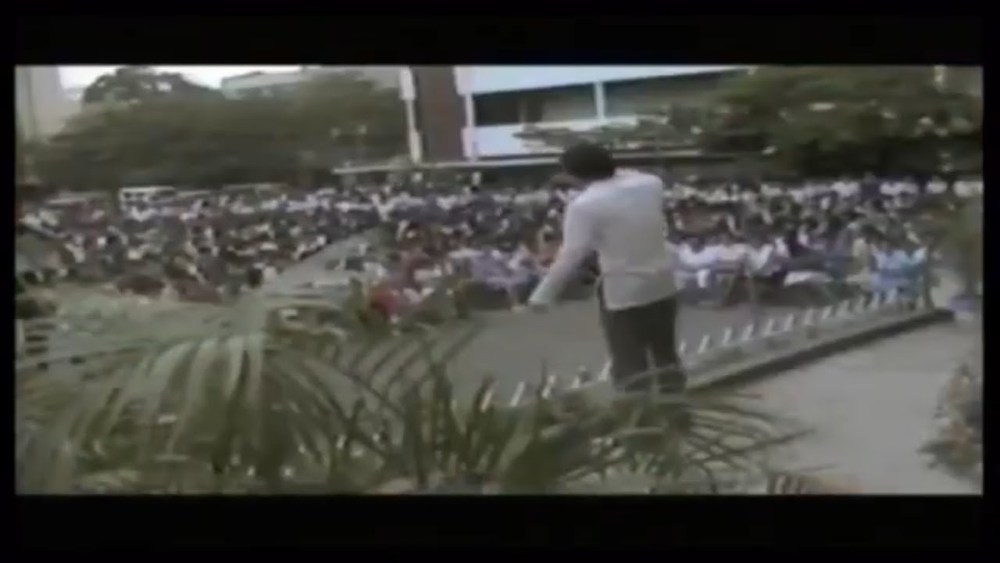
Thousands begin gathering at the Araullo High School grounds. They arrive in jeepneys, buses, and on foot. Many worship under the heat of the sun or in the rain. There are not enough chairs, and there is no permanent structure capable of containing everyone.
This becomes the powerful image behind the book’s subtitle: The Church Without a Roof.
The lack of a roof becomes symbolic.
This is a church that refuses to be limited by buildings, denominations, social classes, traditions, or geography. Worship is passionate. Prayer and fasting remain central. Volunteers serve sacrificially. Testimonies multiply.
JIL may not yet have impressive facilities, but it already has an enormous vision.
Sir Next Takeaway
A church is not defined by the beauty of its roof, but by the fire burning in its people.
This image stayed with me. Thousands worshipping kahit walang perfect venue, comfortable seat, air-conditioning, or sophisticated production. Matthew 18:20 says that wherever believers gather in His name, Jesus is there. It made me ask myself: Kapag tinanggal lahat ng comfort, will I still worship? Kapag walang applause at walang platform, will I still serve? Church is not something I simply go to; the church is God’s people carrying His presence wherever they go. Even without a roof, when Jesus is truly at the center, that is church.
Chapter 11 — The Rebellion
Chapter Summary
Some of the most painful opposition comes not from outsiders but from people inside the ministry.
While Eddie is abroad, trusted leaders attempt to remove him from leadership and take control of the movement.
The wound is deeply personal. These are people he loved, trained, trusted, and served alongside.
Instead of responding only through organizational power, Eddie turns inward and upward. He wrestles with anger, betrayal, forgiveness, and even whether he himself has failed God.
The crisis threatens JIL’s unity, but it also becomes a test of leadership, humility, accountability, and spiritual maturity.
Sir Next Takeaway
External enemies can wound the body, but betrayal from people we trusted can wound the soul.
Ephesians 4:32 calls believers to forgive as Christ forgave us. This chapter reminded me that leadership will eventually involve relational pain. May mga taong hindi makakaintindi. May disappointments. May misunderstanding. There may even be betrayal. But I do not want yesterday’s wound to become tomorrow’s personality. Forgiveness does not mean pretending nothing happened; it means refusing to allow the offense to control who I become. Jesus must remain Lord even over the parts of my heart that have been hurt by people.
Chapter 12 — A Prophetic Day of Philippine Destiny
Chapter Summary
After the internal rebellion, Dr. Ralph Mahoney ministers at a massive JIL gathering in November 1986.
Without knowing the full details of the recent conflict, he speaks about wisdom, spiritual authority, national influence, revelation, and the future calling of Eddie and the ministry.
The message brings comfort, healing, and renewed courage.
Importantly, prophecy is not presented as a substitute for discernment. It is something that must confirm what God has already placed in a person’s heart and must still be tested before Him.
After a season that could have destroyed the ministry, JIL is reminded: the story is not over.
Sir Next Takeaway
God did not merely comfort JIL after the rebellion—He reminded them of their destiny.
Romans 11:29 says that God’s gifts and calling are irrevocable. This reminded me not to interpret one bad chapter as the conclusion of my entire story. Minsan kapag may failure, disappointment, or unexpected ending, iniisip natin cancelled na ang future. But maybe the painful season is not cancellation. Maybe it is preparation. God may be removing pride, correcting motives, strengthening faith, and preparing us for an assignment we are not yet mature enough to carry. When Jesus is Lord, wounds can become preparation rather than the final chapter.
Chapter 13 — Pastor of the Year—Worldwide!
Chapter Summary
Bro. Eddie eventually receives international recognition as “Pastor of the Year.”
The contrast is striking.
The man once politically blacklisted and rejected by institutions is now being recognized internationally as a Christian leader.
But the chapter does not present the recognition merely as a personal achievement. Behind the honor are years of prayer, sacrifice, rejection, preaching, persecution, volunteerism, and ordinary believers faithfully serving without seeking recognition.
The real story is not the award. It is the faithfulness that existed long before the award arrived.
Sir Next Takeaway
God’s promotion is not simply the reward of ambition; it is often the overflow of faithfulness.
James 4:10 says, “Humble yourselves before the Lord, and He will lift you up.” This chapter speaks strongly to a generation that easily measures success through titles, recognition, followers, awards, and visibility. Those things can be blessings, but they cannot become identity. I have to constantly remind myself: I am not my title. I am not my achievement. I am not the applause I receive. The higher God allows someone to rise, the more important humility becomes. If Jesus is truly Lord, every recognition eventually has to return to Him as worship.
Chapter 14 — The Philippines for Jesus Movement
Chapter Summary
The vision eventually becomes larger than JIL itself.
Bro. Eddie carries a burden for the unity of the Body of Christ and for national spiritual transformation. Out of this burden grows the Philippines for Jesus Movement.
The message is significant: no single church owns revival.
If the Philippines is to experience genuine transformation, denominational competition must give way to cooperation, evangelism, prayer, moral renewal, and collective responsibility.
The nation’s problems are not merely political or economic. Laws and institutions matter, but lasting transformation requires changed hearts.
Sir Next Takeaway
A genuine national vision is never about making one church famous—it is about making Jesus known.
Psalm 33:12 says, “Blessed is the nation whose God is the Lord.” I love this chapter because it challenges the temptation to make ministry about labels, personalities, territories, or organizations. Kapag si Jesus talaga ang center, hindi ko kailangang palakihin palagi ang sarili kong pangalan. The Kingdom is bigger than my platform. The mission is bigger than one denomination. And as a Filipino Christian, transformation begins with how I live, speak, lead, serve, and influence the space God has entrusted to me. Jesus must not only be Lord of my personal life; I want Him to use my life for my generation and my nation.


Chapter 15 — Palawan: Puerto Princesa
Chapter Summary
The story moves outside Metro Manila and into a simple JIL community in Puerto Princesa.
The surroundings are modest—simple structures, challenging roads, limited resources—but worship is alive.
The chapter demonstrates that revival cannot be measured by sophisticated facilities or metropolitan prominence. The same Gospel reaches ordinary families and distant communities.
Sacrificial giving, faith during financial hardship, cultural challenges, and trust in God become central themes.
The fire that began in Bible studies could no longer remain in Manila.
Sir Next Takeaway
Revival is not proven by how impressive the venue is; it is seen when ordinary people genuinely surrender everything to Jesus.
Mark 16:15 tells believers to go into all the world and preach the Gospel. This chapter reminded me that ministry is not always glamorous. Minsan ministry is simply showing up. Travelling far. Listening. Praying. Encouraging one person. Serving where nobody is taking photos. We can become so attracted to big audiences that we forget Jesus also ministered to individuals. If God gives me one person to encourage, that person matters. If He sends me somewhere simple, that place matters. Jesus is Lord wherever He sends me—even when nobody else is watching.

Chapter 16 — A Gambling Center Converted to a Worship Center?
Chapter Summary
The final chapter presents one of the boldest visions in the story: transforming a property associated with gambling into a worship center for God.
Humanly speaking, the dream seems impossible.
The property is expensive. Resources are limited. The ministry continues facing religious and political pressure, even losing access to venues it had been using.
Yet every attempt to contain the movement seems to reveal its strength even more. Massive public gatherings demonstrate that JIL has already become far bigger than any one location.
And the book closes not with every dream completed, but with faith still moving forward.
Sir Next Takeaway
God specializes in redemption—not only of people, but of places, histories, failures, institutions, and broken dreams.
Revelation 21:5 declares, “I am making everything new.” This final chapter stayed with me because if God can transform a place associated with gambling into a place of worship, then no part of my story is beyond His power to redeem. My mistakes do not have to define me. My weaknesses do not have to disqualify me. Even seasons that looked wasted can become material God uses for His purpose. A revolutionary became a preacher. A persecuted fellowship became a worldwide movement. And whatever God still chooses to make of my own story, I want one truth to remain above everything: JESUS IS LORD.
The Heart of the JIL Love Story
After sixteen chapters, I realized that the real story is not simply organizational growth.
It is transformation.
A political revolutionary became a spiritual revolutionary. Bible studies became a movement. Persecution became expansion. A church without a building became a church that could not be contained by walls. Personal salvation became a responsibility to serve the nation.
And perhaps the greatest lesson is this:
God did not waste anything in Bro. Eddie’s life.
He did not waste his courage.
He did not waste his intellect.
He did not waste his activism.
He did not waste his pain.
He did not waste his rejection.
He did not waste his questions.
When Eddie surrendered to Jesus, God redirected everything.
And that gives me hope.
Because maybe surrender does not mean God erases everything that came before. Maybe surrender means allowing Him to redeem it, purify it, and use it for His glory.
My Deepest Reflection as a JIL Worker and Christian Leader
Perhaps the greatest danger facing our generation is this:
We can inherit the institution without inheriting the fire that built it.
We can admire the thousands who gather today and forget the handful of people who once gathered around an open Bible.
We can appreciate comfortable worship centers and forget the years when believers worshipped under the sun and rain.
We can celebrate the victories while forgetting the intercessors.
We can honor the leader while forgetting Dory, Leni, the students, volunteers, workers, families, and unnamed believers who prayed, sacrificed, gave, and served.
We can enjoy the ministry that exists today while forgetting that others endured blacklisting, financial struggle, betrayal, persecution, threats, explosions, and even death to carry the Gospel forward.
And so The JIL Love Story leaves me with a question I believe every generation of JIL workers must answer:
Are we merely maintaining what they built, or are we carrying the same love, surrender, holiness, courage, sacrifice, and passion that built it?
Because JIL cannot simply become another institution that knows how to conduct excellent programs.
The original love story was written through surrender.
Before there was scale, there was sacrifice.
Before there were facilities, there was faith.
Before there were thousands, there were Bible studies.
Before there was influence, there was obedience.
Before there was recognition, there was persecution.
And before there was a movement called Jesus Is Lord, there had to be a man willing to surrender and say:
Jesus, You are Lord of me.
That is where this story becomes my story too.
As a JIL worker and Christian leader, I do not simply want to inherit the history. I want to inherit the heart behind it.
I want a faith that remains alive even when no one applauds.
I want a leadership that values people more than position.
I want influence that points people toward Christ rather than toward myself.
I want the courage to stand for truth without losing compassion.
I want the humility to remember that every platform is borrowed, every gift is entrusted, and every achievement belongs ultimately to God.
The roof may now be present.
The facilities may be better.
The organization may be larger.
The reach may be global.
But the question raised by this story remains:
Is the fire still burning?
And perhaps an even more personal question:
Is the fire still burning in me?
Because the greatest legacy of Jesus Is Lord Church is not a building, an event, a crowd, a title, or even a remarkable organizational history.
Its deepest legacy is an uncompromising declaration that must first become personal before it can ever become national:
JESUS IS LORD.
Jesus is Lord over my past.
Jesus is Lord over my present.
Jesus is Lord over my ambitions.
Jesus is Lord over my leadership.
Jesus is Lord over my relationships.
Jesus is Lord over my successes and disappointments.
Jesus is Lord over every door that opens and every door that closes.
Jesus is Lord over every platform He entrusts to me.
Jesus is Lord over my unfinished story.
And as long as He gives me another chapter to live, my prayer is simple:
Lord, let my life become another love story—one that points people not to me, but back to You.
To God be all the glory.
JESUS IS LORD!
Book credit & related links
The JIL Love Story: The Church Without a Roof by Michael Wourms, with a foreword by Dr. Ralph Mahoney. Book and supplied scan: © 1992 Christian Services Publishing. Summaries and personal reflections: Nestor “Sir Next” Layderos.
What stayed with you?
Aling chapter ang tumatak sa iyo—and how is God asking you to respond? Share your reflection in the comments below. If this encouraged you, share it with someone who needs to be reminded that God is still writing their story.
What did you think?
React anonymously. No sign-in needed.
Loading reactions…
Share on Facebook
Loading comments…