
Expertise 03 · Speaking & Learning Experiences
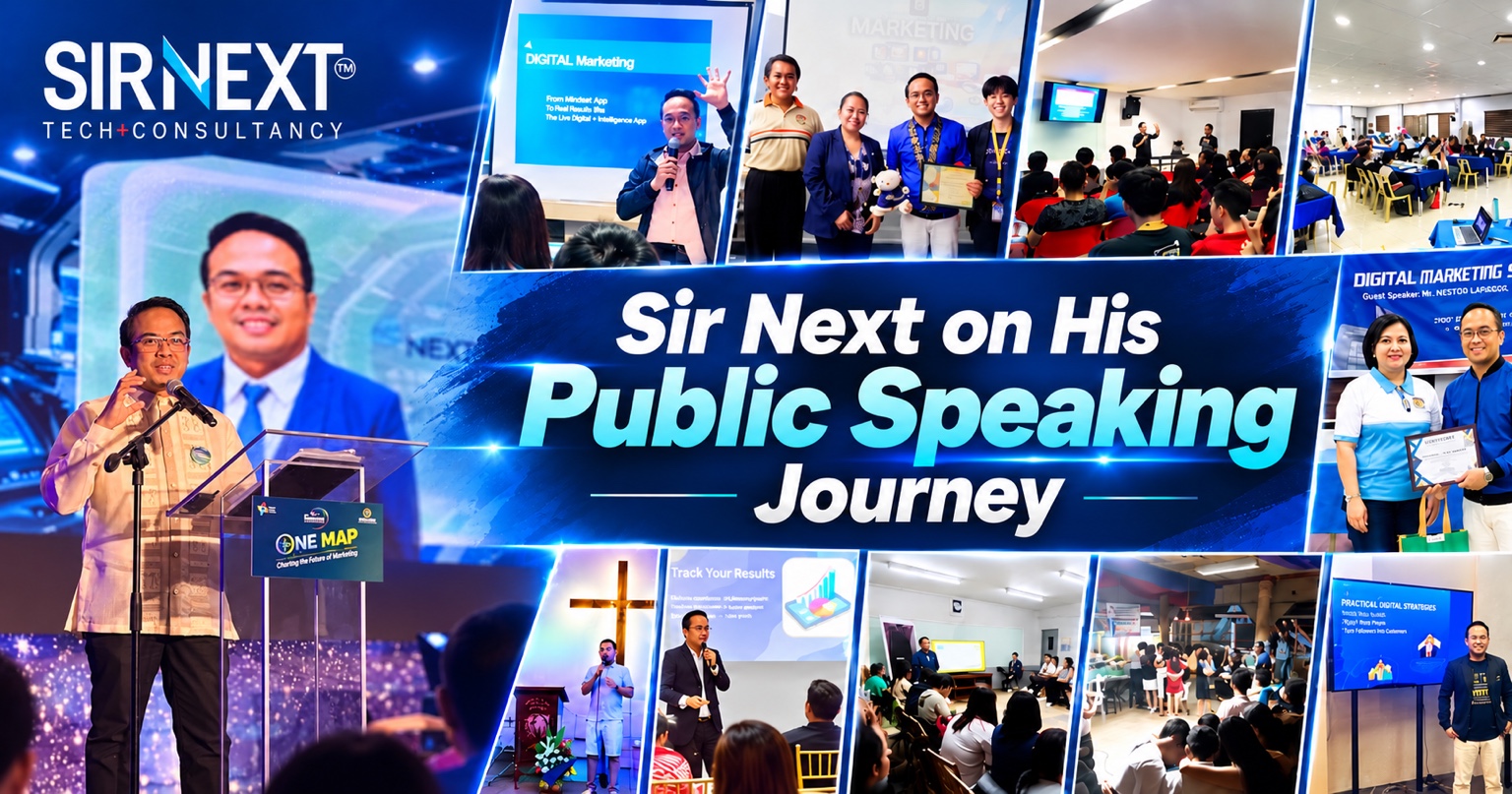
Sir Next and His Public Speaking Journey
Before I learned to hold an audience’s attention, I had to learn to hold a microphone with trembling hands. What helped me grow was a clearer reason to speak: to serve the people in front of me.
Nestor “Sir Next” Layderos is a Filipino marketing strategist, professional speaker, AI and digital transformation advocate, and consultant. This journey brings together the industry experience and purpose behind his speaking and learning engagements.
Connection comes before performance
When people ask me what makes a good public speaker, I think first about connection. Fluency matters. A clear voice matters. But neither means much if the audience cannot find themselves in the message.
A good speaker makes ideas understandable, creates room for people to feel and reflect, and gives them a reason to act. That takes authenticity, purpose, and an awareness of who is listening. The most impressive vocabulary is rarely the most useful choice. The better question is: Will this help someone understand something that matters?
This is the approach I bring to speaking and learning experiences on youth, leadership, marketing, and digital change. A session should offer more than information. It should help people connect an idea with their own decisions, responsibilities, and possibilities.
The journey began with a shaking hand
I did not become a speaker overnight. My early opportunities came through church ministry and campus leadership. I held the microphone even when my hands were shaking. Those moments taught me to begin before I felt completely ready.
Training programs, event hosting, Toastmasters, and corporate workshops later gave me different places to learn. Each setting taught me something: how to hold attention, how to handle silence, and how to listen while speaking.
Confidence grew through preparation, prayer, and practice. Preparation gave my message structure. Prayer kept me grounded in its purpose. Practice helped me turn what I wanted to say into something another person could follow.
Over time, I came to understand that confidence does not require perfection. It requires a willingness to do the work, receive feedback, and return to the next opportunity better prepared.
Learning to serve the room
Self-doubt was one of my biggest challenges. There were moments when I wondered whether I was enough—or whether what I had to say would matter.
I also had to learn to read the room. A message can be valuable and still miss its audience when the timing, examples, or delivery do not fit. A student discovering a possible career has different concerns from a professional managing change or a church leader guiding a community.
Feedback and rehearsal helped me improve. Returning to my “why” helped me keep going: I speak not to perform, but to serve.
That means adapting my tone, examples, and energy to the audience. It means listening to questions and noticing where people need a clearer explanation. The audience’s understanding matters more than my attachment to a prepared line.
What this means for your learning experience
My speaking interests bring together four areas that often meet in real life:
- Youth: helping students and emerging leaders find their voice, communicate with confidence, and begin learning through participation.
- Leadership: exploring purpose, values, and the responsibility to communicate in ways that help others understand and act.
- Marketing: connecting messages with audiences through clear ideas, relatable examples, and meaningful communication.
- Digital: making digital marketing and change easier to understand, with attention to how people can apply what they learn.
Whether the format is a talk, a workshop, or a facilitated discussion, I aim to make learning clear, engaging, and relevant. The starting point is the people in the room: what they need to understand and what they can do with it afterward.
Explore NextEVENTS for related engagements and learning experiences, or discover Sir Next’s AI and digital transformation expertise.
A communicator must remain a learner
There are skills I continue to work on. One is concise storytelling: keeping the meaning of a story while removing details that distract from it. Another is strategic silence—allowing a pause to give an important idea time to settle.
I also want to deepen my cross-cultural communication. Different audiences bring different experiences and expectations. Learning to communicate across those differences calls for curiosity, care, and continued practice.
Mentors, workshops, and studying accomplished communicators remain part of that growth. Having experience does not remove the need to learn. It gives me more reasons to keep learning.
Five starting points for students finding their voice
- Know your message. Before preparing your slides, identify the value you want to give. Speak to deliver something useful, rather than simply filling the allotted time.
- Practice with intention. Record yourself, listen carefully, and ask for feedback. Choose something specific to improve in your next attempt.
- Read and listen widely. Good communication grows from good learning. Notice how others explain ideas, ask questions, and listen.
- Speak from your values. Let truth and sincerity guide the message. You do not need to borrow someone else’s personality to be worth hearing.
- Start now. Volunteer for a small event, join a youth group or club, or lead a class presentation. Every opportunity can become a training ground.
Communication is not about being perfect—it’s about being present, purposeful, and passionate.
That is the journey I continue to take. Every audience gives me another opportunity to share—and another opportunity to learn. If people leave with a clearer idea, a useful next step, or the courage to begin, the microphone has served its purpose.
About Sir Next
Nestor “Sir Next” Layderos is a Filipino marketing strategist, professional speaker, and advocate for responsible AI and digital transformation. His speaking engagements connect practical industry experience with marketing, technology, innovation, communication and purpose-driven leadership.
Learn more about Sir Next and explore his awards and recognitions.
Planning a talk, workshop, or learning session for your students, team, or community? Send a speaking or learning inquiry.