Global Education Innovation Summit 2026
Still Learning. Still Evolving. Still a Student.
As a mathematics educator, I can learn a great deal from a student who gets an answer wrong and can show me every step. A correct answer with no explanation gives me much less to work with. That familiar classroom problem took on new meaning for me at the Global Education Innovation Summit.
I joined GEIS online on October 28, 2026. Thank you to Rosedale International Education for bringing educators, university leaders and students together, and to RBC (Royal Bank of Canada) for sponsoring the summit. In my work across education, technology, marketing and leadership, I keep coming back to one conviction: we cannot prepare others for a future we are unwilling to understand ourselves.
A global conversation with a classroom question
The free virtual conference offered on-demand recordings. Its program featured more than 30 speakers and over 40 participating universities and institutions. The international network already reached across more than 70 countries, a figure Rosedale traced to the previous year’s summit.
Gaynor Wong, Rosedale’s director of global marketing and a speaker on its international curriculum pathway, put the purpose simply in the October 1 announcement: “GEIS exists to bring those conversations together in one place”.
What I’m taking back to my work
Sun Hua on creativity and the learner
In the opening keynote, Peking University’s Sun Hua connected creativity with learning, thinking and taking action. What struck me was the importance of that last step. In a marketing class, I could ask a student to generate five campaign ideas. I would learn much more by asking which one they would test with a real audience, why they chose it, and what evidence would change their mind.
Student readiness, from admissions to a first job
The admissions and employability panel brought together Peter Derrick (Imperial College London), Erin Jobidon (University of Waterloo), Sorcha Mulcahy (University College Dublin), David Evan Harris (UC Berkeley) and Julieanne Cutrupi (University of Technology Sydney). Their shared topic connected two moments students often experience separately: applying for university and showing an employer what they can do.
My takeaway for the young professionals I mentor is to save the working notes behind a good project. A portfolio becomes much more useful when you can show which assumption failed, what someone on the team noticed, and why you changed course.
Chris Agnew and Leslie Chan on what students can do independently
Stanford’s Chris Agnew raised a practical concern about learning that appears stronger while AI assistance is available. Rosedale’s Leslie Chan described a classroom sequence rendered in Sina Education’s Chinese-language account as “think, practise, think again” (English translation). Students first form their own view, use AI transparently, then evaluate and revise the result.
I would try that with a short client brief. Give learners five minutes to write their own recommendation, let them compare it with an AI suggestion, then ask them to defend one change aloud. That last conversation gives the teacher something concrete to assess.
What changes when the whole institution adopts AI?
The fireside conversation included Sarah Knight (Jisc), Matthew Winters, Kyle Jensen (Arizona State University) and Lixiang “Jimmie” Yan (Tsinghua University). The agenda put institutional change on the table. For me, that makes AI adoption a leadership question. Before asking a team to use a new tool, I want us to agree on who checks its output, who can challenge it, and who takes responsibility for the final decision.
Kelly Webb-Davies on the choices we hand over
In its account of the closing address, Sina Education reported Oxford’s Kelly Webb-Davies using a literature review to illustrate what learners can lose when they delegate too much. Choosing which findings belong and weighing the strength of the evidence are part of the learning. I recognize the same issue in strategy work. Before I sign my name to a recommendation, I should be able to explain why its evidence deserves someone else’s trust.
Explore the session-by-session agenda · Read the post-summit report in Chinese
Beyond the certificate
Rosedale issued my Certificate of Participation on November 12, 2026. I’m grateful for it. The part I want to carry into my next workshop is a simple question for learners and leaders alike: What did you decide for yourself, and why?
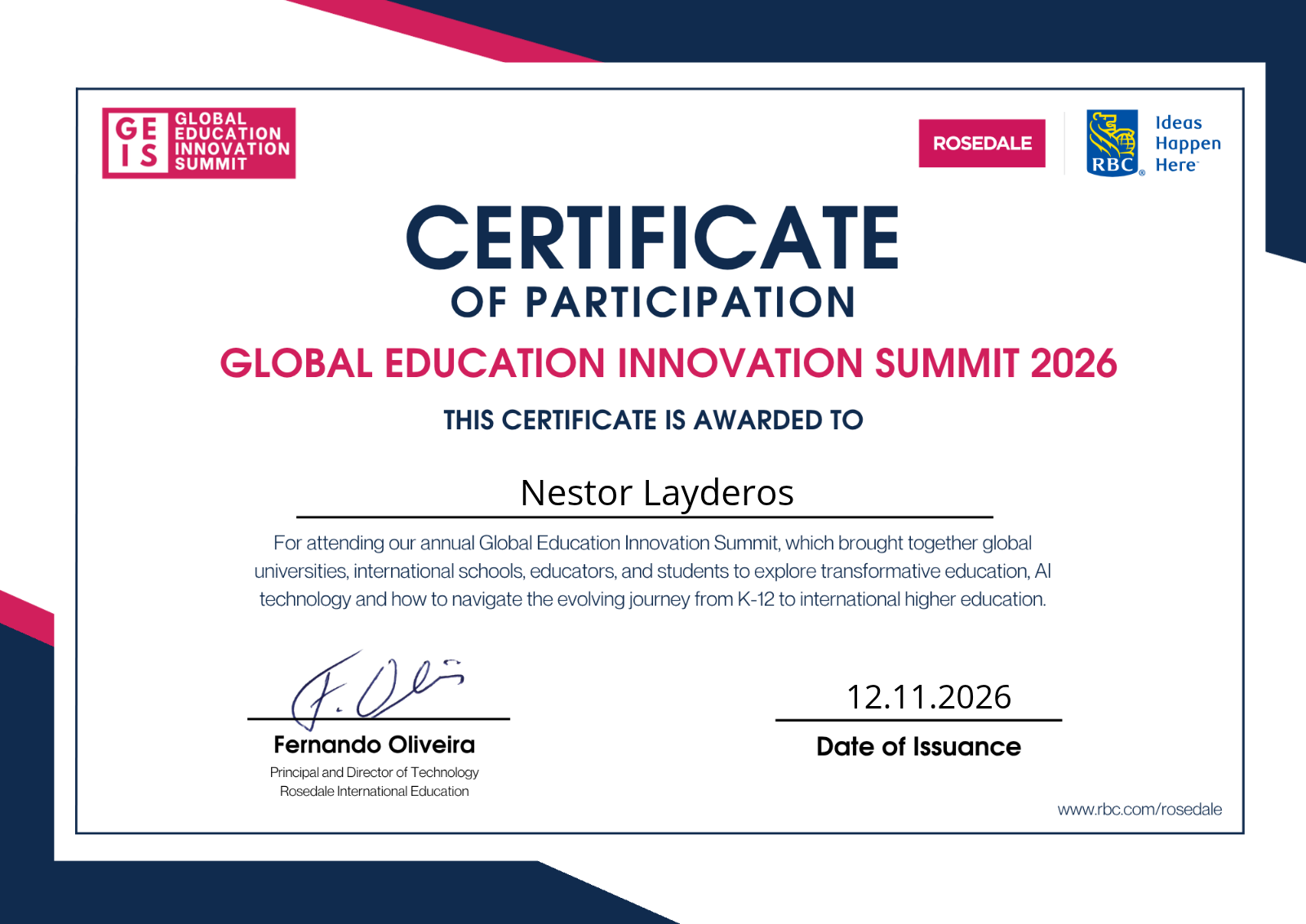
Verify my credential with the issuer →
About Rosedale International Education
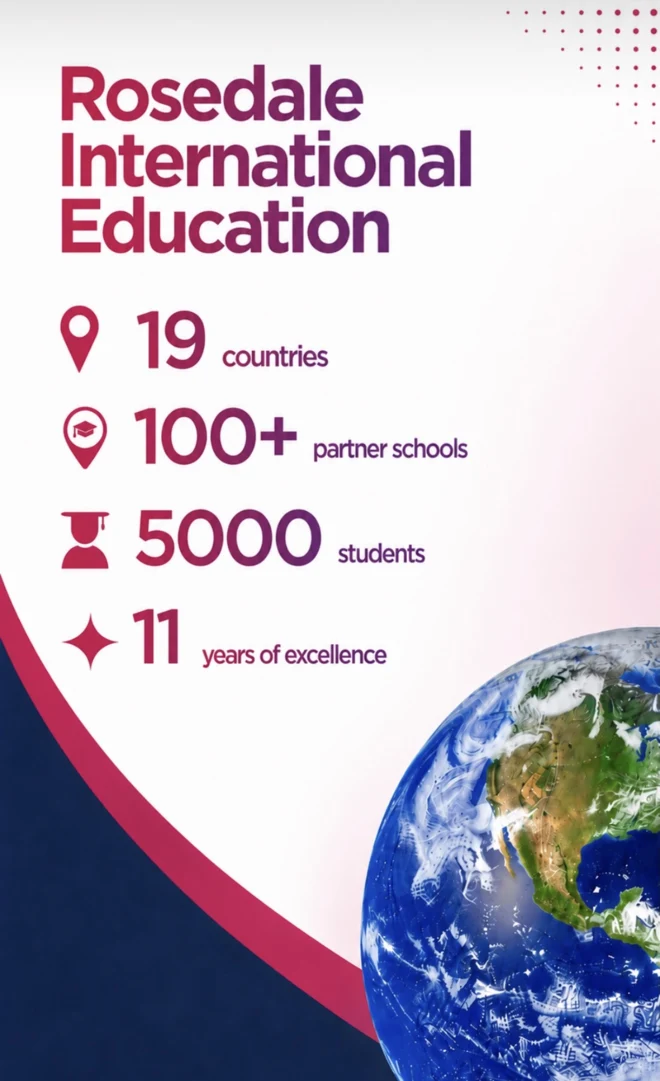
Rosedale International Education Inc. is a Canadian K–12 education provider in the Toronto area. It works with international schools to deliver curriculum through an integrated digital learning platform, with academic support and quality assurance. Its head office is at 7030 Woodbine Avenue, Suite 800, Markham, Ontario L3R 6G2, Canada.
Rosedale International Education · Rosedale on Facebook
A question for my network
As AI changes our professions, what is one human capability you believe we must keep developing? I’d love to hear where you have seen it make a difference in your classroom or workplace.
Stay curious. Stay teachable. Stay relevant.
To God be the glory! 🙏
Loading comments…