
TIESPHI · World Tourism Day 2026
World Tourism Day 2026: TIESPHI calls for a human-centered, AI-enabled future for tourism
As the world marks World Tourism Day under the theme “Digital Agenda and Artificial Intelligence to Redesign Tourism,” The International Ecotourism Society Philippines, Inc. calls for innovation that strengthens communities, protects biodiversity, and makes tourism a force for sustainable development.
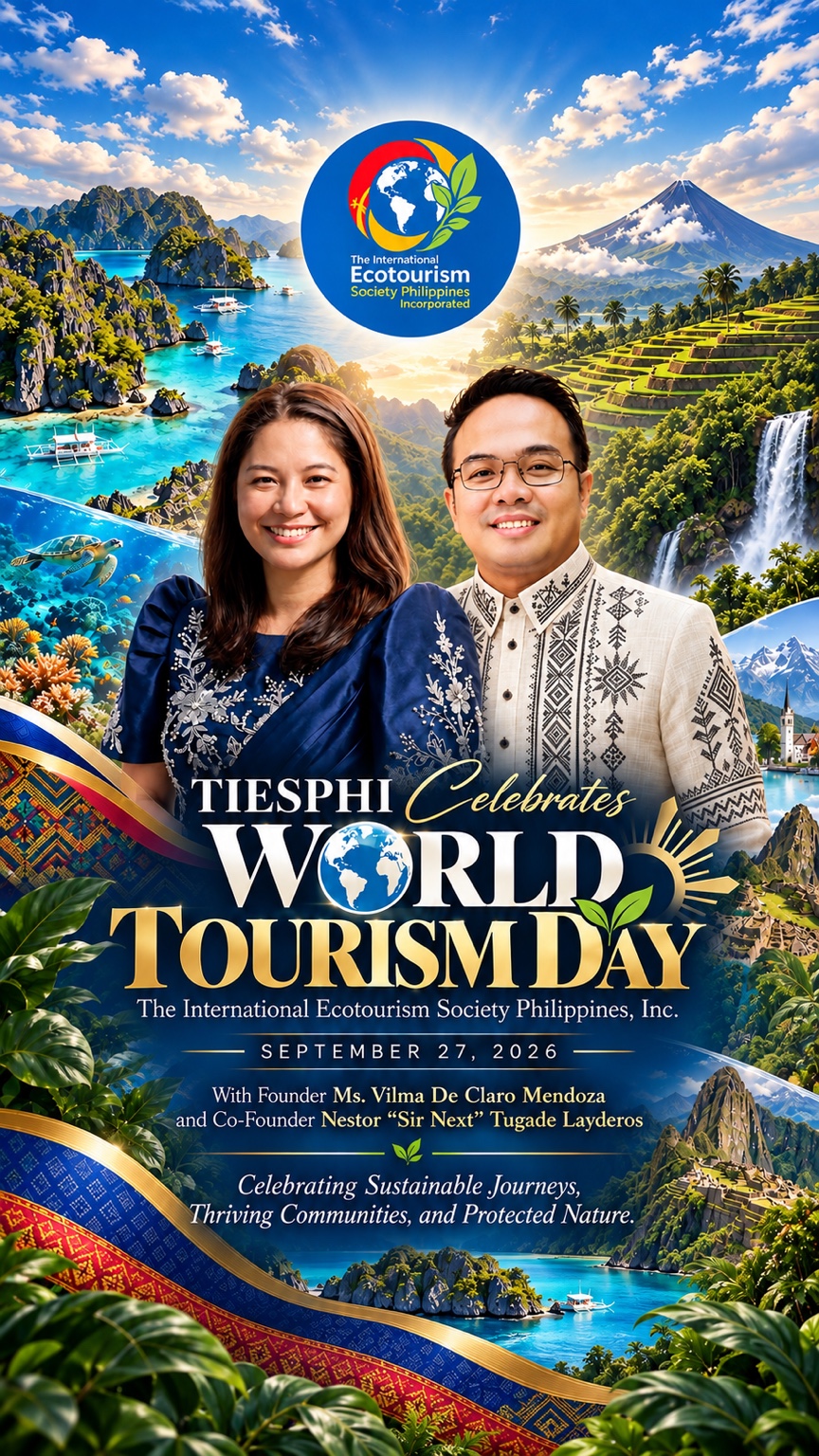
Across islands, mountains, forests, coastlines, and living heritage communities, tourism tells a story far greater than the movement of people. It is a story about livelihoods, traditions communities choose to preserve, and ecosystems passed from one generation to the next. Increasingly, it is also a story about the digital platforms, data systems, and artificial intelligence that influence where travelers go and how destinations manage their future.
On September 27, TIESPHI joins communities and tourism organizations around the world in celebrating World Tourism Day 2026. UN Tourism’s 2026 observance, hosted by El Salvador, puts digital transformation and AI at the center of the conversation. But behind the technology lies a more important question: What kind of tourism are we redesigning, and who will benefit? For TIESPHI, the answer begins with people and the planet.
Why September 27 matters
World Tourism Day was first celebrated in 1980. September 27 marks the anniversary of the adoption of the World Tourism Organization’s Statutes in 1970, according to the United Nations’ history of the observance. The day invites us to consider tourism’s social, cultural, economic, and environmental effects.
Tourism can support employment, entrepreneurship, cultural exchange, and conservation. Unmanaged growth can also strain ecosystems, overwhelm destinations, weaken cultural identity, and leave host communities with too little of the benefit. The challenge is to grow tourism responsibly.
When the algorithm meets the journey
AI can build itineraries, compare destinations, translate languages, and recommend experiences. For planners, data can help forecast demand, understand visitor movement, analyze feedback, and distribute opportunities beyond crowded sites. Yet technology is not automatically sustainable: recommendation systems can repeatedly favor places and businesses that already command the most attention.
In his World Tourism Day message, UN Secretary-General António Guterres cautioned that poorly governed AI could funnel travelers to the same places and platforms, leaving emerging destinations behind. He called for a digital future that includes tourism workers, local communities, and small businesses.
Technology should expand opportunity, help communities become discoverable without surrendering their identity, and guide destinations to manage environmental limits. It should give travelers better choices while deepening their connection with the people and places they visit.
A Philippine perspective: technology in service of stewardship
For the Philippines, digital transformation offers more than a way to promote destinations. It can help manage them. Connected visitor platforms could introduce travelers to local guides, farmers, artisans, community enterprises, and conservation programs. Better information could help planners anticipate seasonal demand and environmental pressure. Translation tools could bring local stories to more visitors, while digital marketplaces could connect community enterprises to travelers before and after a journey.
In this model, technology becomes infrastructure for stewardship. That is the transformation TIESPHI believes is worth pursuing.
Message from the founder
Ms. Vilma De Claro Mendoza
Founder, The International Ecotourism Society Philippines, Inc.
“As tourism enters a new digital era, we must never lose sight of what makes every destination truly valuable — its people, culture and natural environment. Innovation becomes meaningful when it empowers communities, protects biodiversity and enables future generations to experience the beauty we enjoy today. Let us use technology not simply to bring more people to destinations, but to help tourism become a genuine force for conservation and sustainable development.”
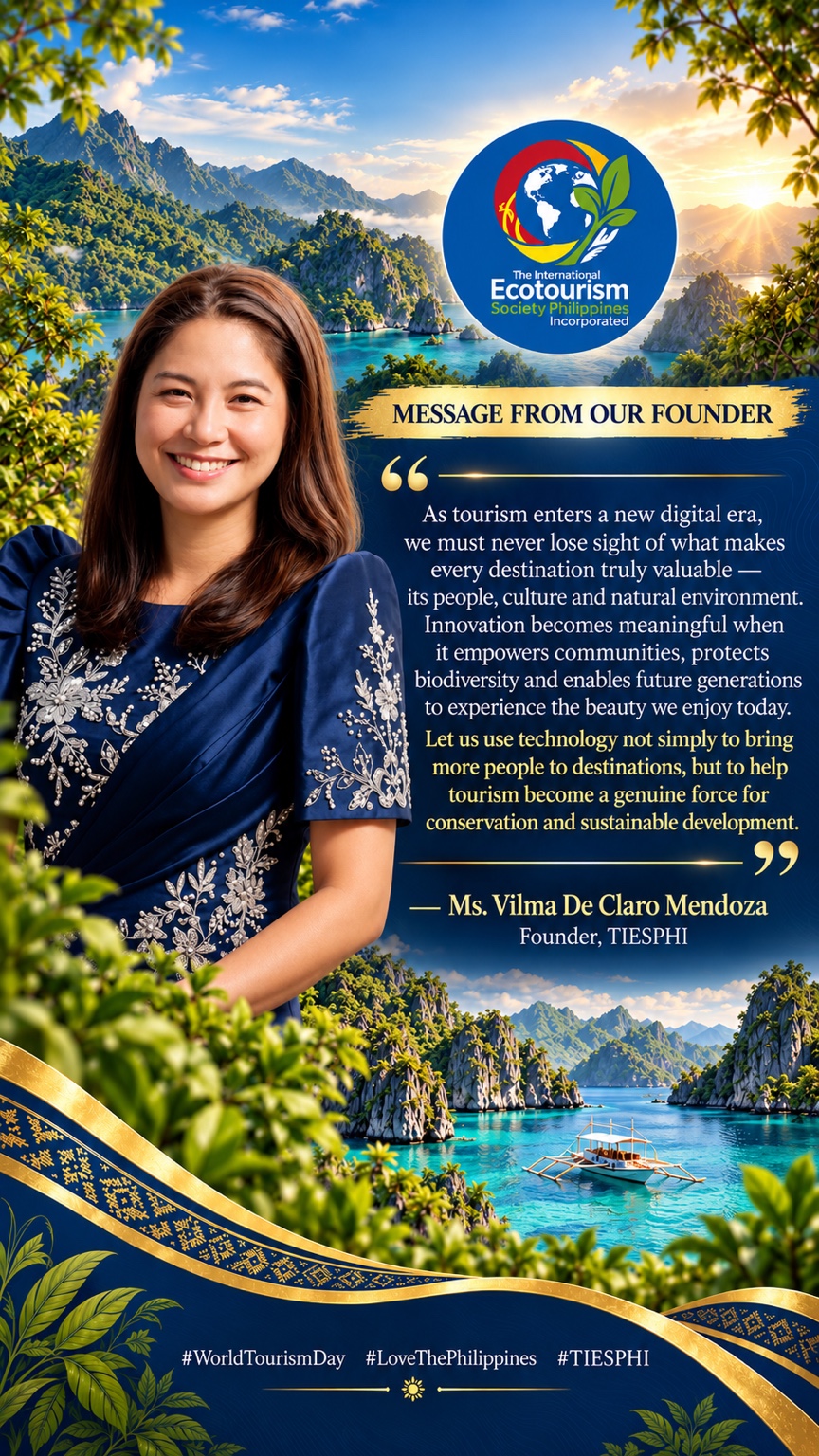
Her message reflects a central ecotourism principle: forests are habitats before they are attractions; coastlines are ecosystems before they are photographs; traditions belong to communities before they become visitor experiences. Tourism thrives over the long term when these foundations remain healthy.
Message from the co-founder
Nestor “Sir Next” Tugade Layderos
Co-Founder, The International Ecotourism Society Philippines, Inc.
“AI can help us predict demand, personalize journeys, manage visitor flows and connect travelers with places and communities that may otherwise be overlooked. But technology should never take us away from the destination — it should help us experience it more deeply and leave it better than we found it. The future is not simply digital tourism. It is human-centered, data-informed and sustainable tourism.”
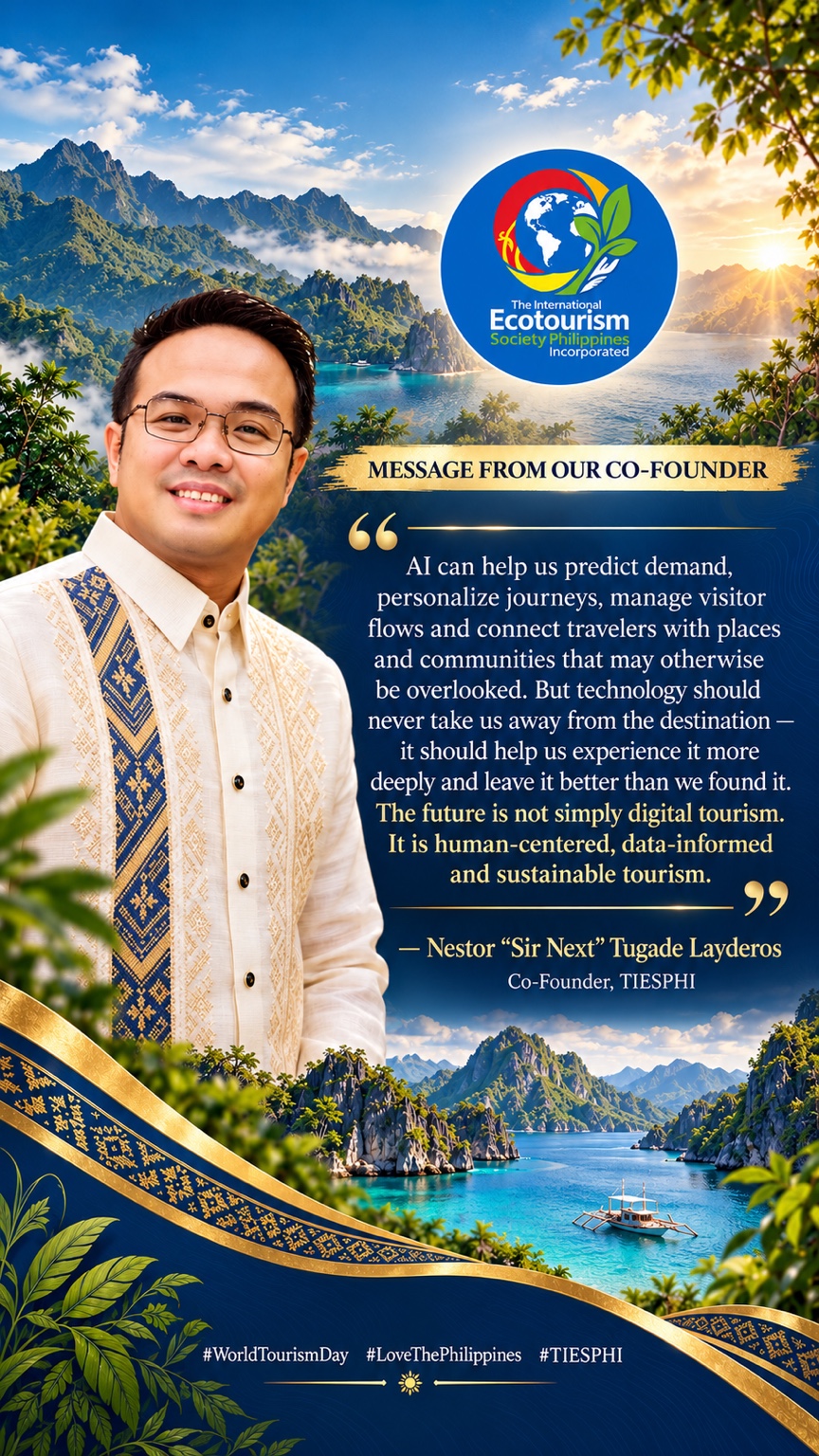
The question is how AI will be designed, governed, and used. If digital transformation measures only efficiency or arrivals, it risks repeating old problems. Designed around conservation, accessibility, communities, and responsible management, it can support a different tourism ecosystem.
From promotion to destination stewardship
TIESPHI advances responsible ecotourism through education, advocacy, and partnerships that support ecosystems and local livelihoods. World Tourism Day is a chance to carry that work into the digital age:
- Promotion → stewardship. Help visitors understand how to experience destinations responsibly.
- Attractions → ecosystems. See communities, businesses, environments, infrastructure, culture, and governance as connected.
- Volume → value. Ask how much benefit stays local and what environmental cost accompanies growth.
- Tourists → responsible travelers. Encourage visitors to respect culture, support local enterprise, and reduce their impact.
- Technology → sustainability. Use platforms, data, and AI to make better decisions for people and places.
Make lesser-known destinations visible
One of AI’s most consequential roles in tourism may be redistribution. Better destination data and responsible recommendations could introduce travelers to communities they would otherwise miss, spreading opportunity and easing pressure on heavily visited places. Inclusion will not happen automatically. Communities need digital skills; small businesses need access to tools; destination information must be accurate; and local culture must be represented authentically.
AI can predict, translate, recommend, and optimize. It cannot replace the hospitality of a host community, the generational knowledge of a guide, or a community’s authority to decide what to protect. The most successful destinations may be those that know where technology can help and where human judgment must lead.
From the Philippines to the world
TIESPHI renews its commitment to tourism that strengthens the places travelers come to experience: where communities share meaningfully in economic value, culture is respected, biodiversity is protected, and innovation reaches destinations beyond established centers. The 2026 theme is about redesigning tourism. The greater aim is to ensure the places we love remain worth visiting—and worth calling home.
Travel with purpose. Innovate responsibly. Empower communities. Protect what makes every destination worth discovering.
From the Philippines to the world, happy World Tourism Day 2026!
Watch and explore
Watch “World Tourism Day 2026 | How AI Is Redesigning the Future of Tourism” on YouTube. For official information about the theme and global observance, visit UN Tourism’s World Tourism Day 2026 page.
Connect and partner with TIESPHI
TIESPHI welcomes local governments, destinations, academic institutions, conservation organizations, private enterprises, communities, and advocates interested in responsible, inclusive, and sustainable tourism. Connect about ecotourism initiatives, advocacy, education, capacity building, and community partnerships.
Email: info@1-ties.org
Ms. Vilma De Claro Mendoza: +63 918 636 4888
Nestor “Sir Next” Tugade Layderos: +63 960 309 4110 · Viber, WhatsApp, SMS
Visit TIESPHI’s website or its official Facebook page.
Sources: UN Tourism 2026 observance; United Nations background; Secretary-General’s message; TIESPHI.